Karnataka is a land of diverse traditions, vibrant festivals, classical art forms, and centuries-old cultural practices. Among its most distinctive performing arts, Yakshagana Is an Important Part of Karnataka culture. Combining storytelling, music, dance, elaborate costumes, expressive movements, and powerful dialogue, Yakshagana is much more than a traditional performance. It is a living representation of Karnataka’s heritage and continues to connect generations with the stories and values of the past.
For visitors exploring coastal Karnataka, experiencing Yakshagana can be an unforgettable cultural experience. The art form is particularly associated with the coastal districts of Karnataka, including Dakshina Kannada and Udupi, making it an excellent addition to a trip around Mangalore and nearby coastal destinations.
Whether you are staying at a beach house in Mangalore, exploring local attractions, or relaxing at one of the resorts around Mangalore, witnessing a Yakshagana performance offers a wonderful opportunity to experience the region beyond its beaches and natural beauty.
What Is Yakshagana?
Yakshagana is a traditional theatre and dance-drama form that originated and developed in coastal Karnataka. The word is generally associated with a combination of music, dance, drama, and storytelling. Performances traditionally draw inspiration from Indian epics and mythology, particularly the Ramayana, Mahabharata, and Puranas.
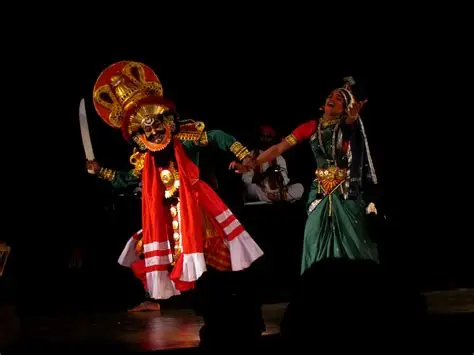
A typical Yakshagana performance features colorful costumes, striking face makeup, energetic dancing, traditional music, and dramatic dialogue. The performers portray characters such as kings, warriors, gods, demons, and other figures from Indian mythology.
Unlike many forms of theatre that depend heavily on written scripts, Yakshagana traditionally allows considerable room for improvisation. Artists respond to the story, audience, and performance environment, giving each show its own character.
This combination of tradition and spontaneity is one of the reasons Yakshagana Karnataka culture remains so fascinating to both locals and visitors.
The Deep Connection Between Yakshagana and Karnataka Culture
Yakshagana is deeply connected with the cultural identity of Karnataka, especially the coastal region. For generations, performances have been organized in villages, temples, and community spaces, particularly during festival and religious seasons.
The art form serves as an important link between the past and present. Stories that were traditionally passed down through generations continue to be presented on stage in a visually engaging way.
Yakshagana does not simply entertain an audience. It also communicates ideas about courage, loyalty, justice, morality, devotion, and the consequences of one’s actions.
Through dramatic storytelling, audiences can connect with ancient narratives while also understanding values that remain relevant in modern life.
A Unique Combination of Dance, Music, and Theatre
One of the most remarkable aspects of Yakshagana is the way several artistic disciplines come together in a single performance.
Dance
Yakshagana dance is energetic and highly expressive. Performers use strong movements, gestures, footwork, and body language to portray different characters and emotions.
The movements are not simply decorative. They help communicate the personality, strength, mood, and role of each character in the story.
Music
Music forms the foundation of a Yakshagana performance. Traditional instruments, including drums and cymbals, create the distinctive rhythmic atmosphere associated with the art form.
The musical accompaniment supports the performers and helps build excitement during important scenes.
Theatre and Dialogue
The storytelling element makes Yakshagana particularly engaging. Performers use dialogue, expressions, gestures, and improvisation to bring mythological stories to life.
The Bhagavatha, traditionally the lead singer and narrator, plays an important role in guiding the performance through music and storytelling.
Together, these elements create a theatrical experience that is both visually spectacular and culturally meaningful.
Why Are Yakshagana Costumes So Elaborate?
The colorful costumes and dramatic makeup are among the first things visitors notice about Yakshagana.
Performers wear elaborate headgear, jewelry, body ornaments, and costumes that help identify their characters. The makeup is equally important, with different styles used to communicate the nature and personality of the characters.
Heroes, kings, divine figures, and powerful villains can have distinct visual appearances. The larger-than-life presentation allows audiences to recognize characters even from a distance during performances held in large open spaces.
The costumes also contribute to the theatrical nature of Yakshagana. When combined with energetic dance and music, they transform performers into larger-than-life mythological characters.
Yakshagana and the Stories of Indian Epics
A major reason Yakshagana remains culturally significant is its connection with India’s great epics and mythology.
Stories from the Mahabharata and Ramayana provide a rich source of characters, conflicts, and moral lessons. Episodes involving legendary figures such as Krishna, Arjuna, Karna, Rama, Ravana, and other mythological characters have been presented through Yakshagana for generations.
These stories are not merely historical or religious narratives. They explore universal themes such as friendship, betrayal, sacrifice, ambition, duty, family, and justice.
As a result, Yakshagana provides audiences with a creative way to understand traditional stories while enjoying a lively theatrical performance.
The Role of Temples and Communities
Yakshagana has historically maintained a close relationship with temples and local communities in coastal Karnataka.
Many performances have traditionally been associated with temple festivals and annual celebrations. Villagers and local communities often come together to organize and attend these performances.
This community participation has helped Yakshagana survive across generations.
Rather than being restricted to formal theatres, the art form has traditionally been performed in open-air spaces, allowing people from different backgrounds to participate as performers, organizers, musicians, and spectators.
This strong community connection is one of the reasons Yakshagana continues to be a living cultural tradition rather than simply a historical art form.
Yakshagana as a Cultural Experience for Travelers
Travelers visiting coastal Karnataka often come for the beaches, food, temples, waterfalls, and scenic landscapes. However, the region’s cultural traditions offer another dimension to the travel experience.
If you are planning a trip to Mangalore, consider adding a traditional Yakshagana performance to your itinerary.
After spending the day exploring the coastline, visitors staying at a beach house in Mangalore can discover local cultural experiences in and around the city.
Similarly, people choosing among the many resorts around Mangalore can combine a relaxing coastal holiday with opportunities to explore Karnataka’s traditional performing arts.
Experiencing Yakshagana allows travelers to understand the local culture rather than simply visiting its tourist attractions.
Yakshagana in the Modern Era
Although Yakshagana has ancient roots, it continues to evolve with changing times.
Traditional performers and cultural organizations have worked to introduce the art form to younger audiences. Performances are now presented in different settings, including cultural programs, educational institutions, festivals, and special events.
Some groups have also taken Yakshagana outside Karnataka, introducing audiences across India and internationally to this unique art form.
Modern technology has further increased its reach. Performances, interviews, documentaries, and educational content related to Yakshagana can now be shared online, helping younger generations discover the tradition.
Despite these changes, the fundamental elements of Yakshagana—storytelling, music, dance, costumes, and cultural themes—remain central to the art form.
Why Younger Generations Should Learn About Yakshagana
Cultural traditions can survive only when they are passed from one generation to another. Yakshagana plays an important role in teaching younger generations about Karnataka’s heritage.
For children and young people, it provides an engaging introduction to mythology, traditional music, theatre, dance, and regional history.
Learning about Yakshagana also encourages appreciation for local artists and traditional performers whose skills are developed through years of practice.
In a rapidly changing world, maintaining connections with traditional art forms can help communities preserve their cultural identity while still embracing modern lifestyles.
Yakshagana and Coastal Karnataka Tourism
Yakshagana is also an important part of the cultural tourism experience in coastal Karnataka.
Mangalore and its surrounding areas attract visitors with beautiful beaches, historic temples, local cuisine, and natural attractions. Adding traditional performances such as Yakshagana creates a more complete travel experience.
Imagine spending the morning exploring the coastline, enjoying traditional coastal food for lunch, relaxing at your beach house in Mangalore, and then experiencing a colorful Yakshagana performance in the evening.
For travelers searching for resorts around Mangalore, cultural experiences can also become an important part of choosing where to stay and what to explore.
The combination of beaches, hospitality, cuisine, temples, and traditional arts makes coastal Karnataka a destination with something for every type of traveler.
Preserving the Legacy of Yakshagana
Preserving Yakshagana requires continued support from communities, artists, cultural organizations, educational institutions, and audiences.
Attending performances is one simple way people can support traditional artists. Introducing children to Yakshagana, documenting performances, conducting workshops, and promoting cultural tourism can also contribute to its preservation.
At the same time, it is important that modernization does not remove the traditional identity of the art form.
The future of Yakshagana depends on finding the right balance between preserving its roots and allowing the art form to reach new audiences.
Frequently Asked Questions About Yakshagana
Is Yakshagana a traditional dance form of Karnataka?
Yes. Yakshagana is a traditional performing art form strongly associated with Karnataka, particularly the coastal districts. It combines dance, music, theatre, storytelling, dialogue, costumes, and makeup.
Where is Yakshagana mainly performed?
Yakshagana is particularly popular in coastal Karnataka, including areas around Mangalore and Udupi. Performances are traditionally associated with temples, festivals, villages, and community events.
What stories are performed in Yakshagana?
Many Yakshagana performances are based on stories from the Ramayana, Mahabharata, and other Indian mythological and Puranic traditions.
Why is Yakshagana important to Karnataka culture?
Yakshagana preserves traditional storytelling, music, dance, costumes, and cultural values. It also provides a connection between generations and helps maintain the cultural identity of coastal Karnataka.
Can tourists experience Yakshagana near Mangalore?
Yes. Depending on the season and local cultural calendar, visitors may find Yakshagana performances in and around Mangalore and other coastal Karnataka destinations. Checking local event schedules before traveling is recommended.
Experience the Cultural Side of Coastal Karnataka
Yakshagana represents the creativity, history, spirituality, and community spirit of Karnataka. Its colorful costumes, powerful performances, traditional music, expressive dance, and timeless stories make it one of the region’s most distinctive cultural traditions.
For travelers visiting Mangalore, discovering Yakshagana can turn an ordinary coastal holiday into a deeper cultural experience. From relaxing at a beach house in Mangalore to exploring local attractions and enjoying the hospitality offered by resorts around Mangalore, there are countless ways to experience the beauty of coastal Karnataka.
The importance of Yakshagana goes far beyond its stage. It is a living tradition that carries stories from one generation to the next, celebrates the artistic heritage of coastal Karnataka, and keeps an important part of the region’s identity alive.
If you are planning your next trip to Mangalore, don’t just explore the beaches. Take some time to discover the stories, music, traditions, and performances that make Karnataka truly special. Experiencing Yakshagana is one of the best ways to see the cultural heart of coastal Karnataka.